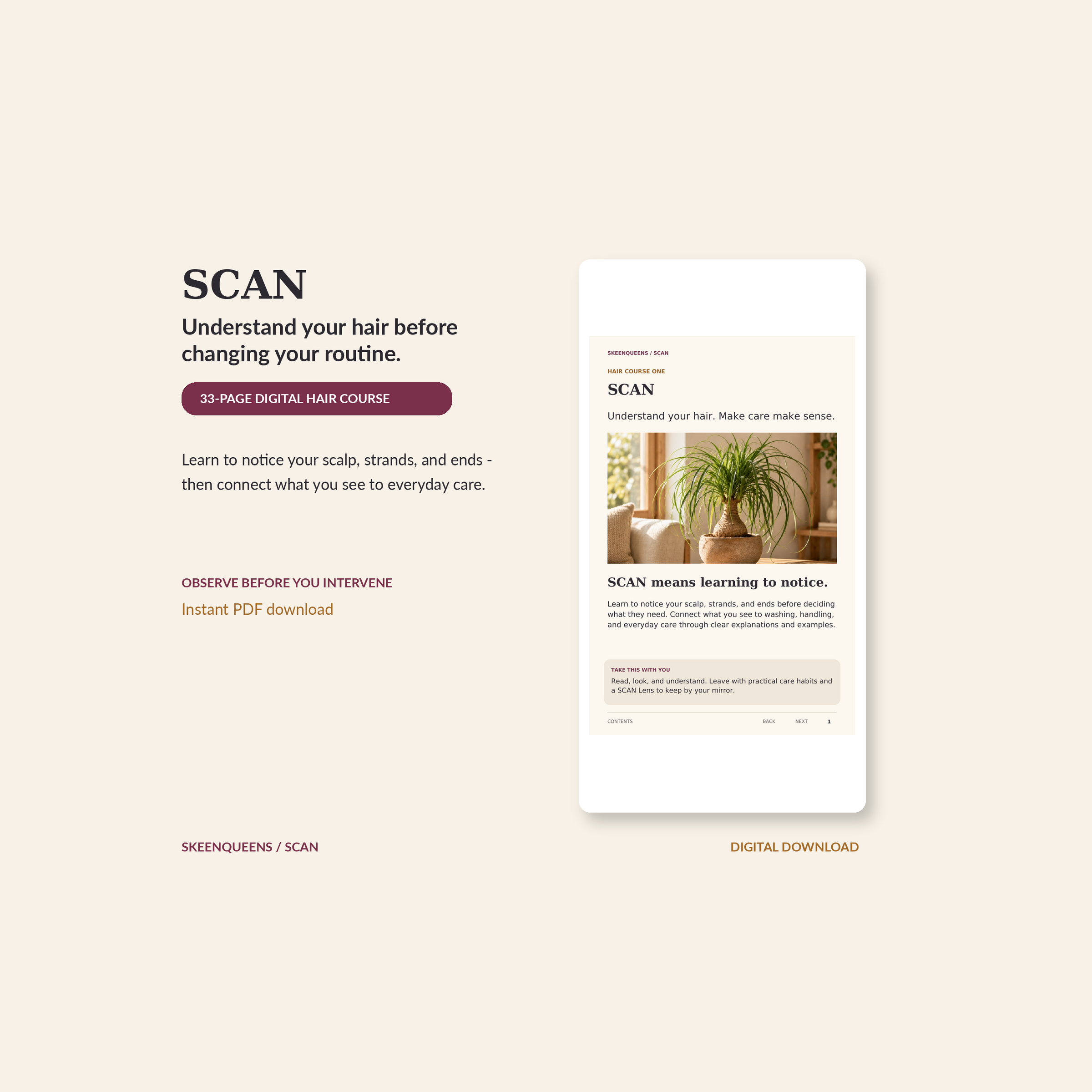
01 · Learn to Notice
SCAN
Observe your scalp, strands, and ends. Separate what you see from what you assume.
33-page illustrated digital PDF
Explore SCAN on Etsy ↗Learn with SkeenQueens
Understand your scalp, strands, and ends—so you can describe what you notice and make more thoughtful care choices.
Meet your scalp, strands, and ends ↓
One useful distinction
When we say “my hair feels dry” or “something has changed,” we may be describing different places. Knowing which part you mean gives you a clearer starting point.
Choose a part below. What do you notice before you read?
01
Your scalp is skin. Hair grows from follicles within it. Sensations such as itch or tenderness come from living tissue, not the visible hair fiber.
Notice: What do you feel or see on the skin beneath your hair?
02
The visible hair shaft is a fiber made of nonliving, keratinized cells. Its surface and condition can change with handling, products, heat, and wear.
Notice: What do you see or feel along the length of your hair?
03
Your ends are part of your strands, not a separate structure. They have usually been exposed the longest and may show more wear than hair nearer the scalp.
Notice: Do the tips look or feel different from the rest of the strand?
One thing to take with you: Before deciding what your hair needs, name where you are noticing the change: scalp, strands, or ends.
This distinction helps you describe an observation; it does not identify a medical cause. Seek qualified care for persistent, painful, worsening, or otherwise concerning changes.
Learn more: Hair follicles · American Academy of Dermatology: healthy hair care.
Optional deeper learning · Three individual digital PDFs
If you’d like a little guidance along the way, I’ve created three illustrated hair-care courses. Choose the one that speaks to your question today. The free discoveries remain here for you, too.
SCAN → TRACE → TEND
01 · Learn to Notice
Observe your scalp, strands, and ends. Separate what you see from what you assume.
33-page illustrated digital PDF
Explore SCAN on Etsy ↗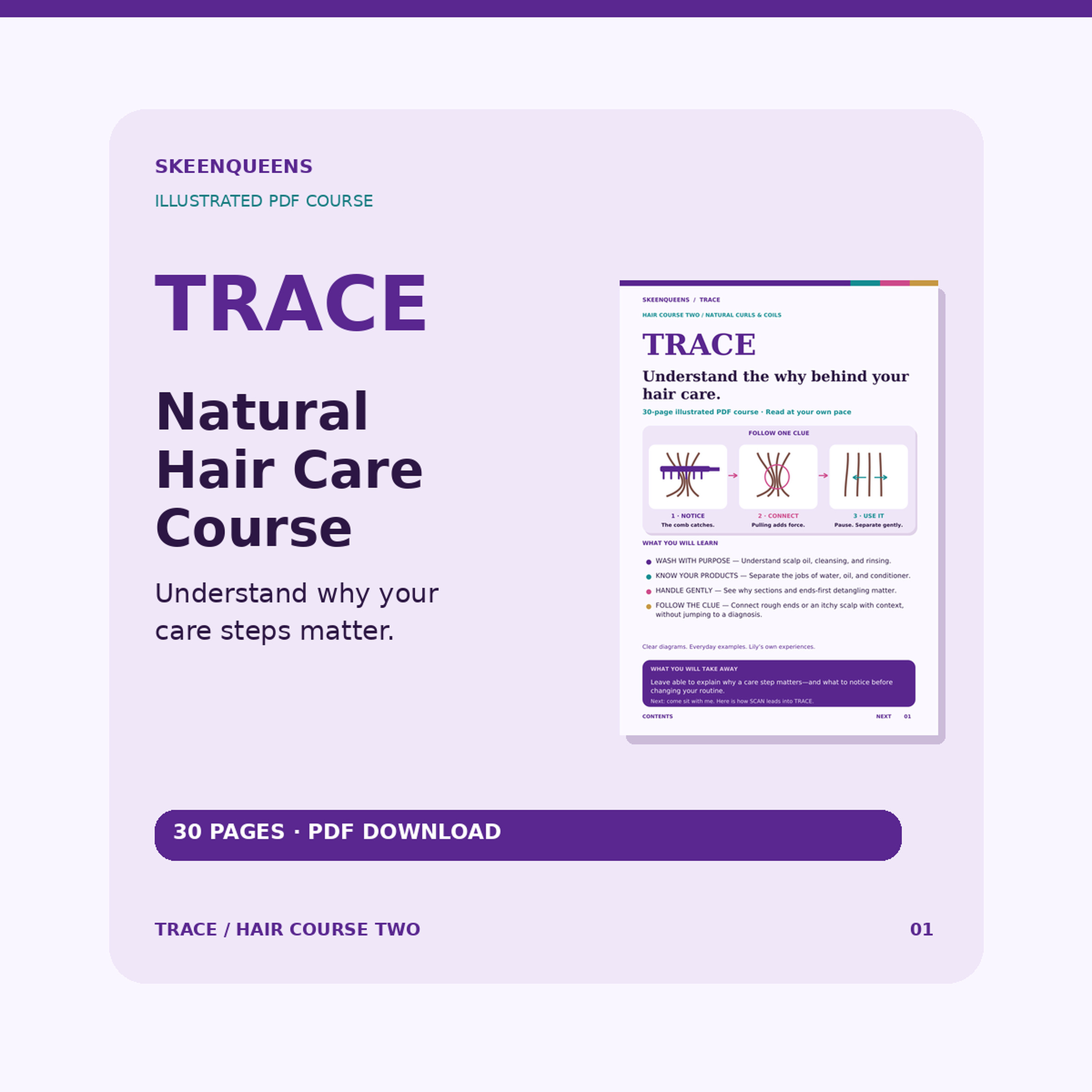
02 · Learn to Connect
Explore possible connections between washing, products, handling, time, and what you notice.
30-page illustrated digital PDF
Explore TRACE on Etsy ↗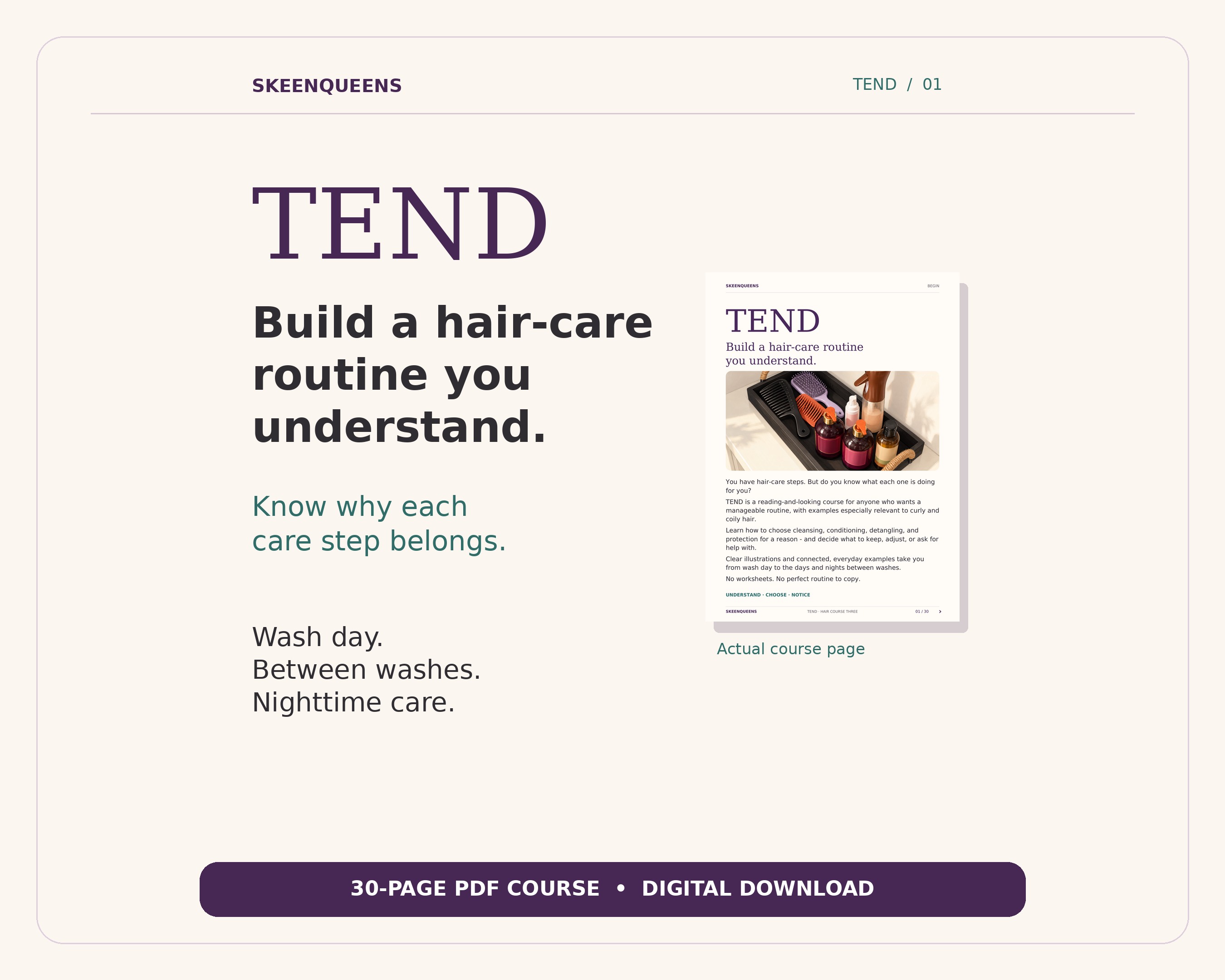
03 · Learn to Respond
Understand the purpose of cleansing, conditioning, detangling, and protecting your hair.
30-page illustrated digital PDF
Explore TEND on Etsy ↗A note from Queen Lily: these self-paced digital PDF courses are sold separately through my Etsy shop. Purchases and downloads happen on Etsy; no physical products are shipped. You can begin with any one, and there’s no hurry.